What to Check Before You Book a Desert Buggy Ride in Dubai
@mybuggydubaipress
Booking a dune buggy experience in Dubai can feel like a straightforward decision until you start comparing options. The desert here is not a single flat stretch of sand. It shifts from soft red dunes near the Al Ain road to harder, packed gravel plains further south. Different buggies handle these surfaces very differently. Before you hand over your payment details, there are several practical things worth verifying. Getting them wrong can turn an exciting afternoon into a frustrating one.
Know What Kind of Buggy You Are Getting
The term "dune buggy" covers a wide range of machines. At one end you have a basic two-seater with a small engine that is fine for gentle cruising. At the other end you have a powerful four-seater with a roll cage, proper suspension, and enough torque to climb steep dunes. The vehicle you choose should match the terrain you will be driving on and your own comfort level with speed. Ask what engine size the buggy has. A 200cc engine feels very different from a 1000cc one. Also check whether the buggy is automatic or manual. Most rental operations use automatics for simplicity, but some offer manuals for drivers who want more control. If you are not confident with a clutch, stick with an automatic.
Another detail is the seating configuration. Some buggies seat two people side by side. Others seat the driver in front and a passenger behind. If you are going with a friend or partner, think about whether you want to share the view or have your own space. Side-by-side buggies make conversation easier. Tandem seating can feel more adventurous but means the person behind gets a less direct view of the track ahead.
Check the Safety Equipment Provided
Desert driving involves bumps, sudden drops, and occasional sharp turns. A proper buggy should have a full roll cage, four-point or five-point harness seatbelts, and a helmet. Some operators also provide goggles and a dust mask. The desert sand gets everywhere, and a good pair of goggles makes a huge difference to your visibility and comfort. Ask whether the helmets are cleaned between uses and whether you can bring your own if you prefer. A reputable operator will not mind you checking the condition of the belts and cage before you set off. If the equipment looks worn or poorly maintained, that is a red flag.
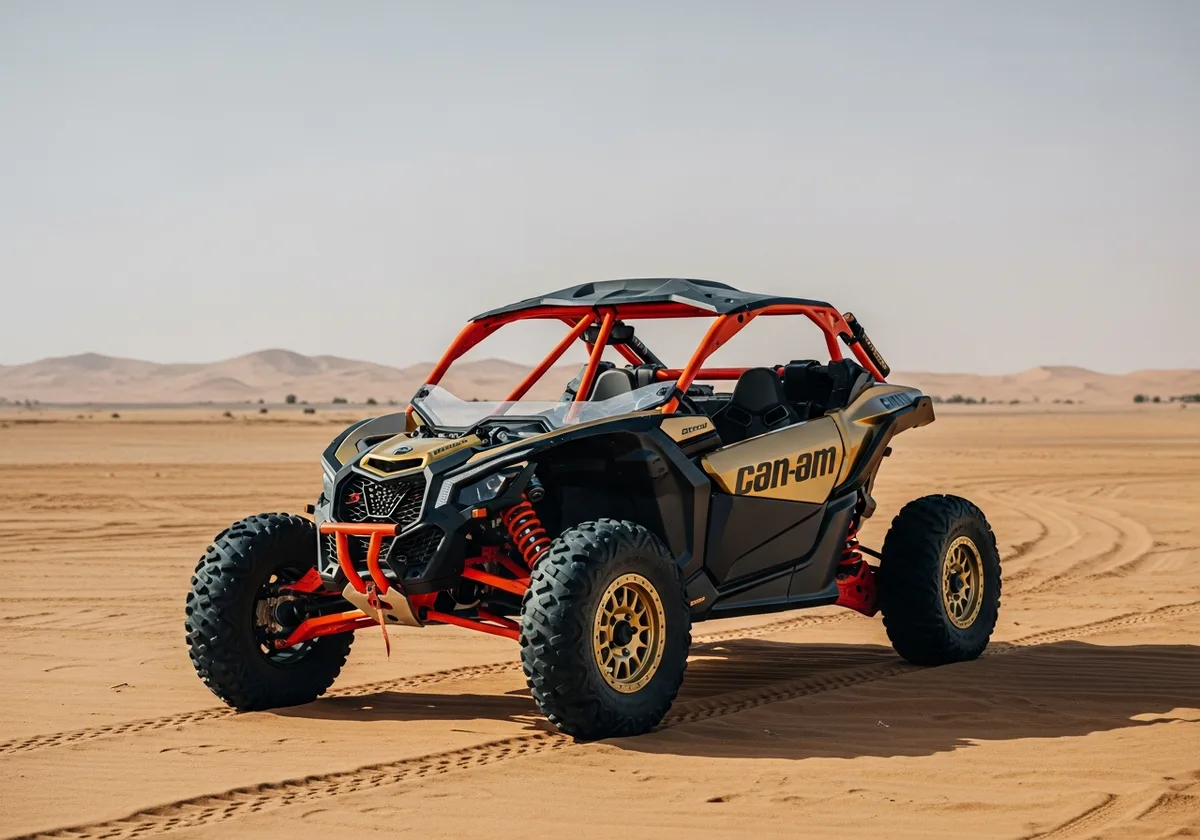
Also confirm whether there is a fire extinguisher mounted in the buggy. It is not common for a buggy to catch fire, but the engine runs hot and the desert is dry. Having one on board is a basic precaution. The same goes for a first-aid kit. Most guided tours carry one in the lead vehicle, but if you are renting a buggy to drive independently, make sure your own vehicle has one.
Understand the Route and the Terrain
Not all desert areas are open to recreational vehicles. Dubai has designated zones for dune buggies and quad bikes, and some areas are restricted for environmental or safety reasons. Before you book, ask exactly which area you will be driving in. A good operator will have a defined route that avoids heavily trafficked roads and protected reserves. They should also explain the difficulty level of the terrain. If you are a beginner, you want a route with moderate dunes and wide open spaces. If you have experience, you might prefer steeper dunes and technical sections that require more precise throttle control.
Weather conditions also matter. Summer temperatures in Dubai can exceed 45 degrees Celsius. Driving a buggy in that heat is physically demanding. The buggy itself can overheat, and you can become dehydrated quickly. Most responsible operators do not run trips during the peak afternoon heat in summer. They schedule early morning or late afternoon sessions. Check what time your booking starts and whether there is a shaded waiting area or air-conditioned lounge where you can cool down before and after the ride.
Insurance and Liability Policies
This is the part most people skip and later regret. Rental agreements for dune buggies often include a damage waiver or a security deposit. The deposit can be substantial, sometimes running into several hundred dirhams. The waiver usually covers accidental damage, but it rarely covers damage caused by reckless driving or driving under the influence. Read the terms carefully before you sign. Ask what happens if you roll the buggy. Some operators charge a flat fee for a rollover, others charge the full cost of repairs. If the deposit seems high, it may be refundable if you return the buggy in the same condition. Clarify this before you pay.
Personal accident insurance is another point. Some operators include basic coverage in the rental price. Others leave it to you. Check whether your travel insurance covers off-road driving. Many standard policies exclude it. If yours does not, consider buying a short-term policy that covers dune buggy driving. The desert is a remote environment. If you get injured, getting medical help can take time. Having insurance gives you peace of mind and covers evacuation costs if needed.
What Is Included in the Price
Rental prices can look attractive until you add up the extras. Some operators quote a base price that covers only the buggy and a short session. Additional charges may apply for a longer duration, a guide, fuel, or a second driver. Ask whether fuel is included. Buggy engines consume a fair amount of petrol, especially on soft sand. If you have to refuel yourself, factor that cost into your budget. Also check whether the price includes transportation to the desert site. Many companies offer pickup from hotels in Dubai. If yours does not, you need to arrange your own transport, and the desert sites are often 30 to 45 minutes outside the city.
Photography and video are common add-ons. Some operators have a photographer who follows the group and takes action shots. Others let you mount your own GoPro on the buggy. If you want a record of the experience, confirm this in advance. The same goes for refreshments. A cold bottle of water after a hot ride is a small thing but matters. Some operators provide water and snacks as part of the package. Others sell them separately.
Check the Operator’s Reputation
Before you commit, spend a few minutes looking at recent reviews. Focus on comments about the condition of the buggies, the professionalism of the guides, and how the operator handles issues like breakdowns or accidents. One or two negative reviews are normal. A pattern of complaints about broken-down vehicles or rude staff is a warning sign. Also check whether the operator has a physical location or office. A company that operates only through a mobile number and a website may be harder to reach if something goes wrong. A business like Dune Buggy Rentals Dubai is one example of an established name that you might come across when researching. The key is to verify that the operator you choose has a proper setup, clear communication, and a track record of delivering what they promise.
What to Wear and Bring
Your clothing affects your comfort more than you might expect. Loose, long-sleeved clothing protects your skin from the sun and from sand kicked up by the buggy. Closed-toe shoes are essential. Sandals or flip-flops can slip off the pedals or get caught. Sunglasses are useful, but they do not replace proper goggles. Bring a scarf or a bandana to cover your mouth and nose if the operator does not provide dust masks. Sunscreen is a must, even in winter. The desert sun reflects off the sand and can burn exposed skin quickly. Carry a small backpack with water. Most buggies have a storage compartment, but it is better to keep your own supply within reach.
If you wear prescription glasses, check whether they fit comfortably under a helmet. Some helmets are tight and press the arms of glasses against your head. You might prefer contact lenses for the ride, but bring eye drops because the dust can dry your eyes out. A small microfiber cloth is useful for wiping goggles clean between stops.
Before You Drive
When you arrive, take a few minutes to inspect the buggy yourself. Check the tyre pressure. Soft sand requires lower pressure for better traction, but the tyres should not look flat. Look at the brake and accelerator pedals. Make sure they move freely and are not obstructed by mats or debris. Check the steering for excessive play. A buggy that wanders on a straight line is tiring to drive and may have worn suspension components. If something feels off, tell the operator before you start the engine. It is easier to switch buggies before the ride than to deal with a breakdown in the middle of the desert.
Listen to the safety briefing. Even if you have driven buggies before, the terrain and the vehicle may behave differently. Pay attention to hand signals used by the guide. In a dusty environment, verbal communication can be difficult. Knowing the signals for stop, slow down, and turn around keeps everyone safe. Ask about the designated meeting points in case the group gets separated. Most guided tours have a lead and a sweep vehicle. If you fall behind, the sweep vehicle will pick you up, but it helps to know the plan in advance.
A well-prepared trip makes all the difference between a memory you treasure and one you would rather forget. Taking the time to check these points before you book ensures that your time in the desert is about the thrill of the ride, not about avoidable problems. Whether you choose a well-known provider or a smaller outfit, the same principles apply. Know your vehicle, understand the terrain, confirm what is included, and verify the safety measures. The desert is a beautiful but demanding environment. Respect it, prepare properly, and you will have an experience worth repeating.
Dune Buggy Rentals Dubai on social media
 Facebook
 Instagram
 YouTube
 Pinterest